Telephone Cable Guide: Types, Pair Counts and How to Choose
Choosing the right telephone cable matters more than most buyers realise. A cable that is too thin, poorly insulated or badly matched to the job produces crackling calls, dropped lines and slow broadband. Whether you are wiring a home, an office, a hotel or a switchboard, the same few decisions apply: how many pairs, what conductor, and where the cable will run.
This guide explains the main telephone cable types, how pair counts work, and what to check before buying.
What Is a Telephone Cable?
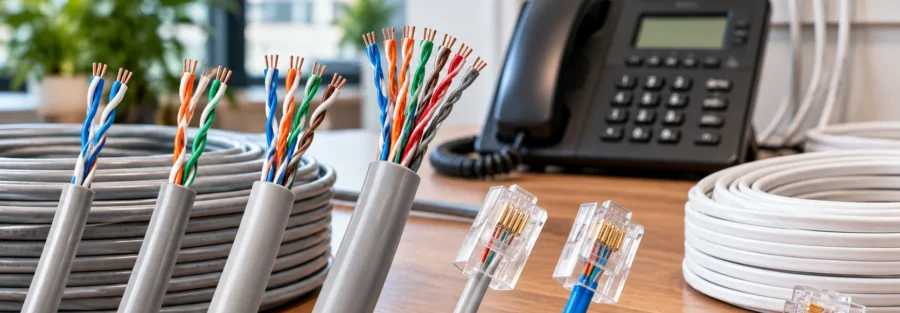
A telephone cable carries voice, and often broadband signals, between the exchange or a main distribution point and your phones, switchboard or modem. Inside the jacket are insulated copper conductors twisted together in pairs. The twist helps cancel interference, so the signal stays clear over distance.
Telephone Cable Types by Pair Count
It is sold by the number of pairs it contains. One pair is enough for a single line, while larger cables serve many extensions and lines.
Cable Type
Typical Use
1 pair
Single phone line, a basic extension
2 pair
Phone plus extra line, small office or intercom
Multi-pair (such as 5, 10, 20 or more pairs)
EPABX and switchboard cabling, offices, hotels, buildings
Choose a pair count that covers today’s lines plus a few spare pairs. Spare pairs make later expansion or fault repair easy, without re-pulling cable through walls and conduits.
Conductor Size and Material
Good telephone cable uses solid copper conductors, commonly around 0.5 mm in diameter, though other sizes exist for specific applications. Pure copper gives stable resistance and reliable performance over long runs. Thinner or lower-grade conductors increase signal loss, which shows up as faint calls, noise and slower broadband on DSL lines.
Indoor vs Outdoor Telephone Cable
Where the cable runs decides which construction you need.
Indoor runs inside buildings need a flexible, neat cable that is easy to route in casing and conduit
Outdoor and underground runs need protection against moisture, so water-blocked or specially sheathed cable is preferred
Runs near power wiring need good insulation and sensible separation to limit interference
Telephone Cable vs Ethernet Cable
People often ask whether telephone cable can carry network data. Telephone cable is designed for voice and DSL-type signals. For computer networks, cameras and modern data needs, use Ethernet cable such as Cat5e or Cat6, which is built for higher data speeds. Likewise, do not use telephone cable for CCTV cameras. Our CCTV camera cable guide explains the right cables for security systems.
How to Choose the Right Telephone Cable
Count the lines and extensions you need now, then add spare pairs for the future
Measure the run length, including bends and slack
Decide whether the route is indoor, outdoor or underground
Check that conductors are pure copper and ask for the conductor size
Look for clear colour coding so every pair is easy to identify and terminate
Buy from a manufacturer that can give you details and support
Installation Tips for Clear Calls
Keep the cable away from heavy power cables and fluorescent light fittings where possible
Avoid sharp bends and tight kinks that can damage the conductors
Terminate each pair carefully and keep the twist as close to the connection as practical
Label both ends and keep a simple record of which pair serves which line
Test each line after installation, before closing up walls or casing
Colour Coding and Pair Identification
Multi-pair cable uses colour-coded insulation so each pair can be identified at both ends. A clear, consistent colour code speeds up termination, makes fault-finding simple and prevents crossed lines on switchboards and distribution frames. Always ask your supplier for the colour code chart that matches the cable you are buying, and keep it with your project records.
Common Telephone Line Problems and Likely Causes
Symptom
Likely Cause
Crackling or noisy calls
Loose terminations, damaged sheath or interference from nearby power wiring
Faint or low-volume calls
Thin conductors, long runs or poor joints
Line drops intermittently
Moisture in joints, kinked cable or a failing connector
Slow DSL broadband
Long or poor-quality line, unfiltered extensions or damaged pairs
Who Needs Bulk Telephone Cable?
Electrical contractors, telecom installers, builders and dealers often buy rolls for housing projects, offices, hotels and institutional buildings. In bulk buying, consistency matters. Using the same cable throughout a project makes testing and fault-finding far easier. Dealers who stock a trusted brand also reduce complaints and returns.
Buy Telephone Cable from a Manufacturer
Rajat Cables offers telephone cable that is suited to telephone and switchboard cabling applications, manufactured at its Ratlam, Madhya Pradesh facility. The brand has been manufacturing since 1981, with a 10-year guarantee on its range. Contact our team with your pair count, length and quantity, and we will share specifications and a quote. You can also see our full range on the products page.
Frequently Asked Questions
How many pairs of telephone cable do I need?
−
Count your current lines and extensions, then add a few spare pairs. For a single home line, one or two pairs is usually enough. Offices and switchboards need multi-pair cable.
Can I use telephone cable for internet or broadband?
+
A telephone line can carry DSL broadband from the exchange to your modem, but for computer networking inside the building, use Ethernet cable.
What is the difference between indoor and outdoor telephone cable?
+
Outdoor and underground cable is built to resist moisture and weather, while indoor cable is designed for easy, tidy routing inside buildings.
The right choice keeps calls clear and lines reliable for years. To discuss pair counts, lengths or bulk supply, contact the Rajat Cables team.
Want to know more telephone cables?Just contact us...